The fabella bone is a small sesamoid bone found at the back of the knee. Unlike the patella, or kneecap, it is present only in some people. In many cases, the fabella causes no symptoms and is found incidentally on a knee X-ray or scan.
However, a problematic fabella can sometimes contribute to pain at the back and outer side of the knee. It may also irritate nearby structures, including the common peroneal nerve, or cause symptoms after knee replacement surgery.
This article explains what the fabella bone is, its function, how common it is, and when it may cause knee problems.
What Is the Fabella Bone?
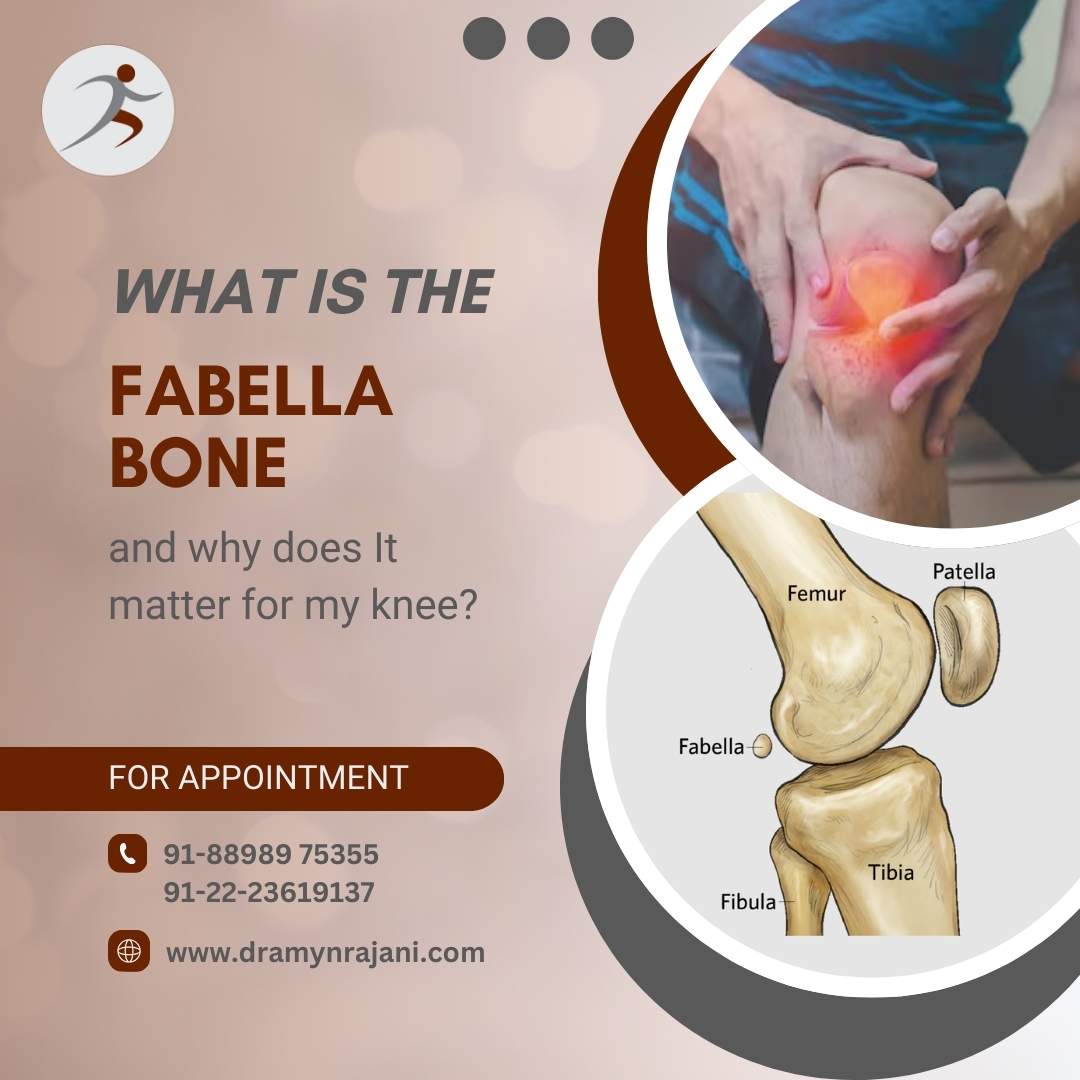
The fabella bone is a small sesamoid bone located within the tendon of the lateral head of the gastrocnemius muscle. It sits behind the outer part of the femoral condyle at the back of the knee.
A sesamoid bone develops within a tendon and helps the tendon handle mechanical stress. The patella is the largest and most familiar sesamoid bone in the body, while the fabella is much smaller and is present only in some people.
The fabella can vary in size and structure. It may be fully ossified and visible on an X-ray, or it may remain partly or completely cartilaginous. Studies report fabellae measuring about 5 to 20 mm in diameter.
The fabella bone in knee anatomy is also important because it sits directly against the posterolateral surface of the femoral condyle. This contact can cause friction and irritation when the fabella is enlarged, hypermobile, or otherwise symptomatic.
What Is the Function of the Fabella Bone?
The fabella bone function is mainly linked to the stability and movement of the posterolateral part of the knee.
The fabella provides an attachment point for the fabellofibular ligament, which connects with structures around the fibular head and lateral meniscus. These connections help distribute forces around the knee during movement.
- Fibular attachment: The fibular bundle connects the fabella to the fibular head and helps resist certain varus and hyperextension stresses.
- Meniscal attachment: The meniscal bundle extends towards the posterior horn of the lateral meniscus.
- Knee stability: These attachments help support the knee's posterolateral structures during extension and external rotation.
- Load sharing: The articulation between the fabella and femoral condyle may help distribute mechanical forces around the joint.
Therefore, the fabella is more than an incidental bone. Its position and attachments give it a role in the posterolateral knee's mechanical function.
How Common Is the Fabella Sesamoid Bone?
The presence of the fabella sesamoid bone varies between individuals and populations. Reported rates also depend on how researchers detect the fabella.
| Population or group | Reported prevalence |
| General population | 10% to 30% |
| Cadaveric studies | Up to 68.6% |
| Asian populations | 25% to 87% |
| Bilateral occurrence when present | 75% to 80% |
Radiological studies generally report lower rates because a cartilaginous fabella may not appear on a standard X-ray. Anatomical studies can identify both bony and cartilaginous forms.
The fabella can also become more clearly visible with age as it undergoes progressive ossification. Published studies have not established a clinically significant difference in prevalence between men and women.
The Fabella Bone in the Knee: Anatomical Relationships
Understanding the fabella's position matters because it lies close to several structures on the back and outer side of the knee.
Common Peroneal Nerve
The common peroneal nerve runs close to the fabella in some people. If an enlarged, inflamed, or mobile fabella puts pressure on the nerve, it can cause symptoms such as pain, tingling, numbness, or weakness along the outer part of the leg and foot.
In more severe cases, nerve compression may contribute to foot weakness or foot drop.
Lateral Meniscus
The fabellofibular ligament has an attachment to the posterior horn of the lateral meniscus. As a result, abnormal movement or loading around the fabella can affect nearby structures.
MRI may help distinguish fabella-related pain from a lateral meniscus injury.
Popliteal Artery
In rare cases, an enlarged fabella may affect the popliteal artery located behind the knee. Published case reports have described vascular compression associated with the fabella, although this is an uncommon complication.
Fabella Syndrome: When the Fabella Bone Causes Pain
Fabella syndrome refers to pain caused by irritation or mechanical friction involving the fabella and the posterolateral femoral condyle.
Most people with a fabella have no symptoms. However, the bone can become painful when repeated movement creates excessive pressure or friction around the joint.
What Causes Fabella Syndrome?
Repeated movement of the fabella against the femoral condyle can cause local irritation during knee flexion and extension. In some cases, the fabella may enlarge or become more mobile, increasing pressure between the two surfaces.
This may contribute to irritation of nearby soft tissues, changes in the articular cartilage, and persistent pain at the back and outer side of the knee.
Symptoms of Fabella Syndrome
Common symptoms may include:
- Pain at the back and outer side of the knee
- Pain during full knee extension
- Discomfort while running or climbing stairs
- Pain after prolonged walking
- Tenderness around the posterolateral femoral condyle
- Clicking or snapping around the back of the knee
- Numbness or tingling when the nearby peroneal nerve is affected
Symptoms can become more noticeable during activities that repeatedly load or extend the knee.
How Is Fabella Syndrome Diagnosed?
Diagnosis starts with a clinical examination and a review of the patient's symptoms. The doctor may also recommend imaging to identify the fabella and assess the surrounding structures.
- X-ray: Helps identify an ossified fabella and assess its size and position.
- MRI: Helps detect a cartilaginous fabella and assess cartilage, soft tissues, bone marrow, and the lateral meniscus.
- CT scan: May be used when more detailed bone information is needed.
Because posterior knee pain can have several causes, imaging also helps rule out other conditions that may produce similar symptoms.
Conditions That Can Cause Similar Posterolateral Knee Pain
| Condition | Common distinguishing features |
| Fabella syndrome | Localised posterolateral pain, especially during terminal extension |
| Posterolateral corner injury | Varus instability and ligament laxity, often after trauma |
| Lateral meniscus tear | Joint-line tenderness and positive meniscal tests |
| Common peroneal neuropathy | Numbness, sensory changes, or foot weakness |
| Baker's cyst | Posterior swelling or fullness behind the knee |
| Proximal tibiofibular joint problem | Local tenderness and restricted fibular movement |
A detailed clinical examination and appropriate imaging are important because these conditions can produce overlapping symptoms.
Treatment of Fabella Syndrome
Treatment depends on symptom severity and the underlying cause. Most cases are initially managed conservatively.
Conservative Treatment
Initial treatment may focus on reducing irritation around the fabella and improving knee function.
- Activity modification to reduce movements that trigger pain
- Anti-inflammatory medication when appropriate
- Physiotherapy for gastrocnemius flexibility and knee mobility
- Targeted treatment for surrounding soft-tissue irritation
- Ultrasound-guided corticosteroid injection in selected cases
The aim is to reduce pain and mechanical irritation while improving movement around the knee.
Physiotherapy
Physiotherapy may include soft-tissue techniques, stretching of the lateral head of the gastrocnemius, and exercises to improve mobility around the posterior knee.
Published case reports describe improved knee movement after specific manual therapy techniques for fabella syndrome. However, treatment should be selected according to the patient's symptoms and clinical findings.
Extracorporeal Shock Wave Therapy
Radial extracorporeal shock wave therapy has also been described as a treatment option for fabella syndrome. A published case series reported pain improvement after treatment, although evidence remains limited and further research is needed to establish its role.
Surgical Treatment: Fabellectomy
When symptoms remain severe despite conservative treatment, surgeons may consider surgical removal of the fabella (fabellectomy) in selected patients.
Fabellectomy can be performed through an open approach or arthroscopically. The decision depends on the patient's symptoms, anatomy, imaging findings, and the surgeon's assessment.
Because the fabella lies close to important nerves and blood vessels, surgeons must have a strong understanding of posterolateral knee anatomy during surgery.
The Fabella Bone and Knee Replacement Surgery
The fabella bone in knee replacement patients can be clinically relevant when it is large or prominent.
During total knee replacement, the relationship between the femoral component and the structures at the back of the knee changes. In some patients, this can contribute to continued or new posterolateral knee symptoms.
Published reports have described fabellar stress fractures several months or years after knee replacement. Fabellar snapping has also been reported as a cause of clicking and posterior knee pain after surgery. MRI, CT, or dynamic ultrasound may help identify these problems.
In selected patients with a large, symptomatic fabella, the surgeon may consider removing it during knee replacement. This decision depends on the patient's anatomy and clinical findings, not the presence of a fabella alone.
Fabella Bone Treatment in Mumbai
For patients in Mumbai with persistent posterior or posterolateral knee pain, a proper orthopaedic evaluation can help determine whether the fabella contributes to the symptoms.
Dr. Amyn Rajani, Consultant Knee, Shoulder and Hip Surgeon and Chief Surgeon and Director of OAKS Clinic in Mumbai, specialises in arthroscopic knee surgery and joint replacement procedures. Evaluation may include a clinical examination, review of existing scans, and imaging where required to identify the cause of knee pain and plan suitable treatment.
Should You Be Concerned If You Have a Fabella Bone?
Having a fabella bone usually does not require treatment. Many people have a fabella without pain or movement problems, and it may be found accidentally on an X-ray or other knee imaging.
Medical evaluation becomes more relevant when the fabella is associated with symptoms such as:
- Persistent pain at the back or outer side of the knee
- Pain that increases during full knee extension
- Clicking or snapping behind the knee
- Numbness or tingling along the outer leg or foot
- Foot weakness
- Persistent posterior knee pain after knee replacement
These symptoms can also occur with other knee conditions, so a proper clinical assessment is important before linking them to the fabella.
Final Thought
The fabella bone is a small sesamoid bone located at the back of the knee. It has connections with the fabellofibular ligament and surrounding structures that contribute to the function of the posterolateral knee.
For most people, having a fabella is harmless. However, an enlarged, mobile, or irritated fabella can sometimes contribute to posterior knee pain, nerve symptoms, or problems following knee replacement. Diagnosis usually involves a clinical examination along with appropriate imaging.
Treatment depends on the cause and severity of symptoms. Conservative treatment is generally considered first, while fabellectomy may be an option for selected patients with persistent symptoms.
Frequently Asked Questions
What is the fabella bone?
The fabella bone is a small sesamoid bone located within the tendon of the lateral head of the gastrocnemius muscle at the back of the knee. It can be bony or cartilaginous and is present only in some people.
What is the function of the fabella bone?
The fabella bone's function is associated with the stability and movement of the posterolateral knee. It provides an attachment point for the fabellofibular ligament and helps distribute forces around the knee during movement.
How common is the fabella sesamoid bone?
Radiological studies report the fabella sesamoid bone in about 10% to 30% of people, and up to 68.6% in some anatomical studies that include cartilaginous forms. When present, it is often found in both knees.
What is the fabella bone in the knee, and is it a problem?
The fabella bone in knee anatomy refers to the small sesamoid bone located behind the posterolateral femoral condyle. In most people, it causes no symptoms. It may become a problem when it causes mechanical irritation, nerve compression, or symptoms following knee replacement.
What does fabella syndrome feel like?
Fabella syndrome can cause pain at the back and outer side of the knee, particularly during full knee extension, running, stair climbing, or prolonged walking. Some people may also experience clicking or snapping. Numbness, tingling, or weakness can occur if the nearby peroneal nerve is affected.
Can a fabella bone be removed?
Yes. Surgical removal of the fabella is called fabellectomy. It may be considered for selected patients with persistent symptoms that have not improved with conservative treatment. The procedure can be performed through an open or arthroscopic approach.